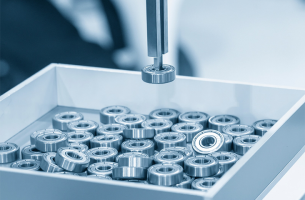
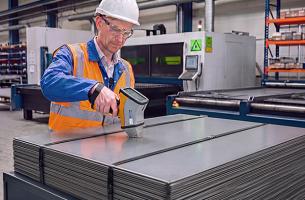
Kugellager-Express chose the X-MET8000 by Hitachi High-Tech Analytical Science to streamline their incoming goods inspection process and to determined stainless steel types of rolling bearings to ensure corrosion resistance for their customers. By saving time using the handheld analyzer, the team were able to swiftly and precisely analyze the chemical composition of their products without damaging the items so they were ready for shipment to their customers.
Rolling bearings play a vital role in the world of industry and technology. Their quality and durability are crucial, as they find application in various precision and long-lasting settings. Kugellager-Express GmbH, headquartered in Schloß Holte-Stukenbrock, provides an extensive selection of rolling bearings and accessories. These offerings serve industries such as mechanical engineering, agriculture, conveyor technology, sports equipment, household appliances and even model construction. Every product undergoes a thorough inspection to ensure it meets customer demands. Kugellager-Express holds certification in accordance with DIN EN ISO 9001.
As a global supplier, the company needs to ensure that all its products undergo detailed incoming goods inspection. This crucial quality control step is implemented to maintain the highest standards, ensuring that only top-quality products enter the inventory.
Kugellager-Express distributes rolling bearing products crafted from both bearing steel and stainless steel. When it comes to meeting stringent corrosion resistance standards, identifying the specific type of stainless steel is crucial. To evaluate the corrosion resistance of stainless-steel rolling bearings, a traditional method involved immersing them in a water bath for an extended duration. However, the time-consuming nature of this method and the concerns raised by some customers about the magnetic properties of the delivered rolling bearings have led to a need for an alternative analysis method. Unlike the more commonly known V2A stainless steel, the stainless steel used in rolling bearings is a different type, known as martensitic and hardenable, which can exhibit magnetic properties due to its manufacturing process.
Kugellager-Express has introduced a handheld XRF (X-ray fluorescence) device. Daniel Dust, the Technical Director, selected the X-MET8000 for swift and precise analysis of chemical composition without damaging items. He highlights, “Using the X-MET8000, we can now examine the correct material of a significantly larger number of items compared to before, greatly enhancing product safety, which is invaluable.” This successful implementation is also attributed to the personalized product training and instructional materials provided by Hitachi.
With the X-MET8000, consistent material analysis can be carried out for all ordered products. There are different stainless-steel grades for rolling bearings, each with varying corrosion resistance. KugellagerExpress can use XRF to purchase the stainless-steel grade with better corrosion resistance and pass on this added value to the customers.
Security and trust: Verify that rolling bearings are made from the specified material, boosting trust in the products.
Quality improvement: Analyze the exact stainless-steel grade and ensure corrosion resistance, enhancing product quality.
Traceability: Establish a comprehensive material database to document the precise composition of each rolling bearing, ensuring full traceability, even in customer complaints.
Speed and precision: Utilize XRF for rapid and accurate analysis, greatly expediting testing processes.
Kugellager-Express aims for its suppliers to adopt XRF analysis for outgoing goods control, ensuring the correct material is used in rolling bearings. Daniel Dust recommends the X-MET8000 to suppliers, citing its user-friendly operation and rapid, precise analysis results. The introduction of the X-MET8000 XRF handheld device has significantly enhanced quality control at Kugellager-Express, assuring customers of high-quality rolling bearing products that meet rigorous standards.
There are a range of methods for achieving accurate metal analysis. If you require fast, non-destructive alloy identification and elemental analysis, handheld XRF’s like the X-MET8000 are a great option to use on site. On the other hand, laboratory OES analyzers can give more accurate results but require a lab sample which can take longer to process.
Handheld XRF is highly accurate for identifying and verifying many metal alloys when the sample is clean, the instrument is properly calibrated, and the elements of interest are within its measurement capabilities. It is widely used for positive material identification (PMI), scrap sorting and foundry quality control.
The best tool depends on whether you want to determine a metal's chemical composition, internal defects, hardness or coating thickness. Our handheld XRF analyzers are best for alloy identification, especially in stainless steel, nickel alloys, copper alloys and many other metals.